


Advice On Skincare Habits For Young People
1. General advice on skincare for young people
2. Common skin issues
3. Ingredients and labelling
4. Anti-ageing skincare?
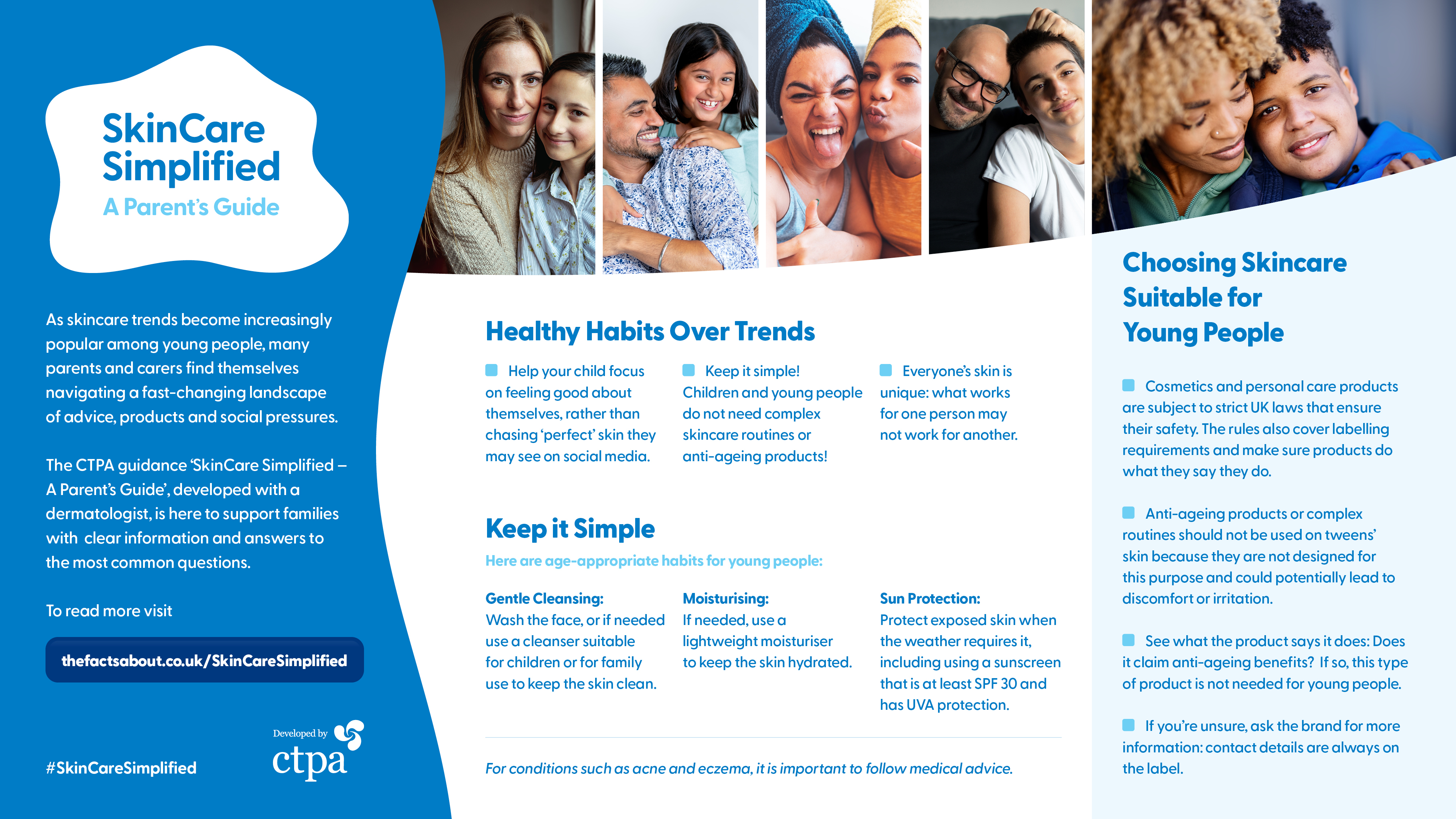
Download and share our infographic:
- Mobile phone format (ideal to share with family and friends)
- Desktop format (ideal to print or use on computer screens)
1. General advice on skincare for young people
Q. What are the basic skincare steps my child actually needs?
If your child has any pre-existing skin conditions, it is important that you speak to a healthcare professional for tailored advice. The information provided here is intended for skin without pre-existing conditions.
The first, and most important, point for all age groups is to help your child or teenager understand that the pursuit of perfect skin is unrealistic and unnecessary, as many images on social media are heavily edited and do not reflect reality. Encourage open conversations about the impact of social media on self-esteem and body image and promote a healthy self-image by focusing on their unique strengths and qualities. Set a positive example by embracing your own natural beauty and speaking positively about yourself and others.
Suitable skincare habits for children are simple, quick and easy to remember. A skincare routine will not give your child or teenager ‘perfect’ skin, so it is important to help them have realistic expectations and to accept their own individual skin and appearance. Keeping the skin clean; for example, by using a gentle cleanser, and if necessary, keeping dry skin hydrated with a lightweight moisturiser, will help keep skin soft, smooth and in good condition. Children don’t need moisturisers with added benefits such as anti-ageing, radiance boosting or promoting even skin tone, just a basic moisturiser is suitable.
When the weather requires it, make sure that your child is wearing a sunscreen of at least SPF 30 which protects against UVA and UVB rays. UVB protection is indicated by the SPF, and UVA protection by a symbol showing the letters ‘UVA’ in a circle. Again, a family sunscreen product should be used rather than one with added beauty benefits which is aimed at adults. Visit our dedicated section on sunscreens and sun protection for the whole family here: Read all about sunscreens
Dr. Anjali Mahto’s advice:
When it comes to children’s and teenagers’ skin, less is more. A consistent routine that is gentle and protective is sufficient. Cleansing once daily with a mild, fragrance-free product is usually adequate; teenagers who are active or beginning to develop oiliness may benefit from cleansing morning and evening. Daily moisturising supports the skin barrier and reduces the risk of irritation, even if dryness is not obvious. Choose a simple, fragrance-free lotion or cream for most children; teenagers with oily or acne-prone skin may prefer a lightweight, oil-free gel. Sun protection is the single most important long-term step: use a broad-spectrum sunscreen (SPF 30–50) applied generously and reapplied every two hours if outdoors. In the UK and Europe, look for the UVA in a circle logo; in Asia and elsewhere, you may see a PA grading (PA+ to PA++++). Avoid products marketed with cosmetic benefits such as “radiance boosting” or “anti-ageing”, which are unnecessary and may irritate young skin.
Q. What should I look for when buying skincare products for my child?
Suitable skincare habits for young people are simple, quick and easy to remember.
Keeping the skin clean; for example, by using a gentle cleanser, and if necessary, keeping dry skin hydrated with a lightweight moisturiser, will help keep skin soft, smooth and in good condition. Children don’t need moisturisers with added benefits such as anti-ageing, radiance boosting or promoting even skin tone, just a basic moisturiser is suitable.
When the weather requires it, make sure that your child is wearing a sunscreen of at least SPF 30 which protects against UVA and UVB rays. UVB protection is indicated by the SPF, and UVA protection by a symbol showing the letters ‘UVA’ in a circle. Again, a family sunscreen product should be used rather than one with added beauty benefits which is aimed at adults. Visit our dedicated section on sunscreens and sun protection for the whole family here: Read all about sunscreens
Here is more detailed advice based on various age groups:
For pre-teens (7-11)
For pre-teens, suitable skincare habits are simple, quick and easy to remember.
Wash face every day to keep skin clean.
Pre-teen skin may start to experience some puberty-related changes. For example, hormonal fluctuations may lead skin to become oilier, or drier and more sensitive. Together, you and your child can identify how their skin is changing, and which products might be suitable to help keep whichever skin type your child has in the best possible condition. For example, a lightweight, non pore-clogging (non-comedogenic) moisturiser designed for oily skin, or a heavier and richer cream. For dry skin, it may be suitable to moisturise both in the morning and before bedtime.
Children don’t need moisturisers with added benefits such as anti-ageing, radiance boosting or promoting even skin tone, just a regular moisturiser is suitable.
When in the sun, make sure that your child is wearing a sunscreen of at least SPF 30 which protects against UVA and UVB rays. UVB protection is indicated by the SPF, and UVA protection by a symbol showing the letters ‘UVA’ in a circle.
Dr. Anjali Mahto’s advice:
At this age, skincare should be minimal and focused on establishing healthy habits. A gentle, fragrance-free cleanser once a day is sufficient, with rinsing in water often adequate for younger children. Moisturiser is recommended daily to support the skin barrier; for normal skin, a light lotion works well, while for dryness a richer cream may be more comfortable. Sunscreen (SPF 30–50, broad spectrum) should be used on exposed areas during outdoor play, with hats and shade as additional protection. Pre-teens may start to notice early changes with puberty, including oiliness or sensitivity; adapt the choice of moisturiser accordingly, but avoid products making cosmetic or anti-ageing claims. Establishing these simple routines early helps normalise healthy skin practices.
For early teens (11-14)
 For early teens, suitable skincare habits are those which are simple and can be followed quickly and consistently, enabling teens to fit caring for their skin into daily lives which are filling up with school, hobbies, friends and more. The focus of the routine should be on healthy, clean, hydrated skin which is protected from UV rays.
Depending on your teen’s skin type, you can look for cleansing and moisturising products which are designed for that skin type. For example, oily/acne prone skin, combination skin, dry skin or sensitive skin. Oily/acne prone skin should still be cleansed gently, as scrubbing skin can cause irritation. Products designed for this skin type often include ingredients which help to gently unclog pores.
Your teen may wish to consider using a moisturiser with SPF protection, to ensure their skin is protected from UV rays on a daily basis. However, moisturiser with added SPF protection is not intended to provide sun protection in the same way as a sunscreen product, so when in the sun, it is still crucial that they also use sunscreen of at least SPF 30 which protects against UVA and UVB rays. UVB protection is indicated by the SPF, and UVA protection by a symbol showing the letters ‘UVA’ in a circle.
Early teens don’t need complicated or advanced skincare products designed for issues which teenage skin doesn’t have; for example, reducing wrinkles or tackling areas of hyperpigmentation.
Dr. Anjali Mahto’s advice:
Hormonal changes often begin at this stage, and oily or acne-prone skin may appear. Cleansing twice daily with a gentle, non-foaming wash can help remove excess oil without damaging the skin barrier. Moisturising remains important, even for oily skin; non-comedogenic, oil-free gels or light emulsions are usually best tolerated. A broad-spectrum sunscreen (SPF 30–50) should be applied daily to exposed areas, with reapplication outdoors. Moisturisers with added SPF are useful but not a substitute for dedicated sunscreen. Teens may show interest in cosmetic actives, but most are unnecessary at this age and risk causing irritation; complex or aggressive routines should be avoided. Consistency with the basics — cleanse, moisturise, sun protect — is more effective than layering multiple products.
For late teens (15-18)
It’s not necessary to spend a lot of money, or a lot of time, for late teens to have a great skincare routine. The basics of cleansing, moisturising and UV protection are still the fundamental building blocks of healthy habits.
Late teens are likely to have a more well-established skincare routine and may be interested in the latest product trends and innovations. Encourage a conversation with your teenager about which products and trends they are interested in, because some of these may not be suitable if they are intended for more mature skin, and you can gently explore this further. It’s great to encourage and support lifelong healthy skin habits; for example, having an awareness of which products and ingredients are suitable for your teen’s skin type and age, as they move into adulthood. This will help your teen to consider whether an exciting new product is going to suit their skin type or not, and whether it is relevant for their stage in life.
It won’t help the skin to start using anti-ageing products before a suitable time, because these products contain ingredients designed to target fine lines, dark spots, lack of radiance, and other signs of ageing. Therefore, they won’t provide those benefits to skin without visible signs of ageing and may cause irritation in some cases. The anti-ageing product that will have more benefit the earlier it’s used is sun protection.
At this age, while social media can offer a sense of community and a platform for self-expression, they also present certain pitfalls that are important for both teens and their families to navigate thoughtfully. The carefully curated images and stories often seen online can create unrealistic expectations and pressures, leading some young people to compare themselves unfavourably with others or feel dissatisfied with their own appearance or achievements. Exposure to negative comments, cyberbullying, or misleading information about beauty and self-care can further impact confidence and mental wellbeing. Encouraging open discussions at home about the realities behind social media posts, the importance of critical thinking, and ways to set healthy boundaries can help teens build resilience and maintain a balanced relationship with their digital lives. More resources on this can be found in the Additional Resources section.
Dr. Anjali Mahto’s advice:
By late adolescence, teenagers often have established habits and may be influenced by trends online. The fundamentals remain unchanged: cleanse gently twice daily, moisturise according to skin type, and protect with SPF 30–50 sunscreen. Late teens may wish to try new products or serums; while curiosity is understandable, they should avoid anti-ageing formulations, which are unnecessary and may irritate young skin. Encourage critical evaluation of marketing claims and remind them that “perfect” skin is neither realistic nor necessary. The only anti-ageing product of true benefit at this stage is sunscreen. Social media can amplify pressures and comparisons; parents can support by reinforcing self-acceptance and encouraging a positive relationship with skincare as health-focused self-care, not appearance perfection.
Q. Are adult or anti-aging skincare products OK for my child to use?
While all cosmetic products must be safe, children don’t need moisturisers with added benefits such as anti-ageing, radiance boosting or promoting even skin tone, just a basic moisturiser is suitable. Anti-ageing products are not designed for young skin and should not be used because they may not feel comfortable or could cause irritation.
 Suitable skincare habits for children are simple, quick and easy to remember. A skincare routine will not give your child or teenager ‘perfect’ skin, so it is important to help them have realistic expectations and to accept their own individual skin and appearance. Keeping the skin clean, for example, by using a gentle cleanser, and if necessary, keeping dry skin hydrated with a lightweight moisturiser, will help keep skin soft, smooth and in good condition.
When the weather requires it, make sure that your child is wearing a sunscreen of at least SPF 30 which protects against UVA and UVB rays. UVB protection is indicated by the SPF, and UVA protection by a symbol showing the letters ‘UVA’ in a circle. Again, a family sunscreen product should be used rather than one with added beauty benefits which is aimed at adults. Visit our dedicated section on sunscreens and sun protection for the whole family here: Read all about sunscreens
Dr. Anjali Mahto’s advice:
Adult and anti-ageing skincare is not suitable for children or teenagers. These products are formulated to target mature skin concerns, such as fine lines, pigmentation, or loss of elasticity, which do not apply to young skin. Ingredients like retinoids, acids, peptides, or high-dose antioxidants are unnecessary at this stage and may cause irritation or damage to the skin barrier of younger skin. The only “anti-ageing” step that is universally appropriate for young people is sun protection, ideally SPF 30–50 broad spectrum. Children and teens should focus on gentle cleansing, regular moisturising, and consistent sun protection; adult products marketed with cosmetic benefits should be avoided until adulthood, or unless prescribed by a healthcare professional for a specific condition.
Q. Should my child exfoliate their skin, use face masks or serums?
Dr. Anjali Mahto’s advice:
Exfoliation, face masks, and serums are not essential parts of a child or teenager’s skincare routine. Mechanical scrubs can cause irritation and disrupt the skin barrier, particularly when used on younger skin, while chemical exfoliants (AHAs, BHAs) are generally too harsh for young skin. Similarly, serums and sheet masks marketed with cosmetic claims (brightening, anti-wrinkle, radiance boosting) offer no benefit at this age and may provoke sensitivity. For teenagers with acne or blackheads, specific exfoliating agents (such as salicylic acid) can be helpful, but these should be introduced cautiously. In general, skincare for young people should prioritise gentle cleansing, moisturising, and sun protection; additional steps are unnecessary unless recommended for a medical condition.
Q. Does it matter that my child is experimenting with different products and trying new products frequently?
 Encourage a conversation with your child about which products and trends they are interested in, because some of these may not be suitable if they are intended for more mature skin, and you can gently explore this further.
It’s great to encourage and support lifelong healthy skin habits; for example, having an awareness of which products and ingredients are suitable for your child’s skin type and age, and later as they move into adulthood.
This will help your teen to consider whether an exciting new product is going to suit their skin type or not, and whether it is relevant for their stage in life.
Dr. Anjali Mahto’s advice:
It is normal for children and teenagers to show curiosity about skincare, particularly as they are influenced by peers and social media. However, frequent switching or layering of products increases the risk of irritation, allergic reactions, or acne flares. A sensible approach is to introduce one new product at a time, allow several weeks to assess tolerance, and discourage multi-step routines copied from online trends. Encourage them to read ingredient lists, focus on products appropriate for their age and skin type, and avoid actives designed for adults. Supporting curiosity with education, about skin-testing, consistency, and realistic expectations, helps young people develop critical thinking as consumers, while keeping their skin safe.
Q. Who can I ask about suitable products for my child?
When it comes to finding suitable products for your child, the best approach depends on whether your child has a specific skin problem or not.
If your child does not have any specific skin problems, you can start by consulting brands’ websites or a shop assistant at a reputable store. Additionally, many skincare brands have customer care lines that you can contact for specific questions about their products. These representatives are knowledgeable about their product lines and can often help you choose the right items for your child.
For general questions about the safety of cosmetic products, you can visit websites like thefactsabout.co.uk. This site provides reliable information about various cosmetic ingredients, helping you make informed decisions.
If your child has a medical skin problem, such as eczema or severe acne, we’d advise you seek professional healthcare advice. The NHS website and organisations dedicated to specific health conditions are an excellent place to start. You can consult a pharmacist in your local pharmacy, in-store pharmacy or online to understand more about the suitability of specific products.
For more severe skin conditions, your GP can assess your child's condition and provide initial treatment recommendations. If necessary, your GP can refer you to a dermatologist for specialised care. Dermatologists are experts in skin health and can offer tailored advice and treatments for your child's specific skin issues.
2. Common skin issues
This section covers some of the most frequent concerns young people may encounter, such as oily skin and sensitive skin, and offers practical advice on how to care for each type. By recognising the unique needs of developing skin, parents and carers can provide the right support and guidance as children grow.
Oily skin
Q. What can make the skin oily and how to care for it?
Dr. Anjali Mahto’s advice:
"Oily skin is often driven by hormonal changes at puberty, which stimulate sebaceous glands to produce more sebum. This is normal and does not mean that the skin is “dirty.” Gentle cleansing twice daily is important, but harsh scrubbing or over-washing can worsen oil production and irritation. Hydration is still essential: lightweight, oil-free, non-comedogenic moisturisers help maintain barrier function without blocking pores. For some young people, gels or fluid emulsions feel more comfortable than creams. Sun protection remains a priority; choose an oil-free, broad-spectrum sunscreen (SPF 30–50) that does not leave a heavy or greasy feel, as this increases the likelihood of regular use. Supporting good hygiene habits such as washing hands before touching the face and cleaning makeup brushes can also reduce the risk of breakouts."
It is important to use a gentle cleanser in the morning and at night time.
 As well as cleansing, it’s important to ensure oily skin stays hydrated. Look for moisturisers designed for oily skin, which are likely to be oil-free and non-comedogenic (meaning they will not clog pores).
Remember to regularly clean any make-up brushes and avoid touching your face as much as possible, and wash hands with soap and water before touching your face. This will help to avoid transferring bacteria to your skin.
For all skin types, sun protection is essential so remember to use a sunscreen with SPF and UVA protection when the weather requires it and consider a daily moisturiser containing added UV protection (but remember this does not replace a sun protection product).
Sensitive skin
Q. What is “sensitive skin” and how to care for it?
Sensitive skin is a common condition where the skin is more prone to reactions such as redness, itching, and a sensation of burning. It can be caused by various factors, including underlying health conditions, environmental factors, or reactions to certain products or ingredients.
Opt for skincare products designed for sensitive skin; for example, these are likely to be fragrance-free, have a pH compatible with the skin’s pH and contain ingredients carefully selected for their gentle profile.
Keeping the skin hydrated by using a moisturiser is important, especially if the skin is dry as well as sensitive. For young people, use a basic moisturiser without added anti-ageing active ingredients to lock in moisture and protect the skin barrier.
Don’t use very hot water for washing your face and bathing, as hot water can strip the skin of its natural oils and exacerbate sensitivity.
Use a broad-spectrum sunscreen with SPF 30 or higher to protect sensitive skin from UV damage. You may wish to choose a sunscreen formulated for sensitive skin.
Dr. Anjali Mahto’s advice:
Sensitive skin is best thought of as skin with a reduced tolerance to external factors, often linked to a more fragile barrier. Fragrance, colorants, harsh surfactants, and high-strength actives are common triggers and should be avoided. Cleansers should be mild and soap-free, and moisturisers should be simple, fragrance-free, and designed for sensitive skin. Barrier support through daily moisturisation is essential. Avoid very hot water, as this strips natural oils and can exacerbate stinging or redness. Sun protection is vital, but formulations for sensitive skin, often mineral-based with zinc oxide or titanium dioxide, may be better tolerated. If irritation persists despite basic measures, a healthcare professional should review the skin to rule out underlying inflammatory conditions.
Acne
If your child has sensitive, acne-prone, or eczema-prone skin, it’s important to select gentle skincare products tailored to their needs.
If your child’s skin concerns - like persistent breakouts or severe eczema - do not improve with gentle, over-the-counter (OTC) products, or are causing discomfort, consult a healthcare professional or dermatologist. They can provide guidance and recommend suitable treatments.
Establishing a consistent, gentle skincare routine and encouraging daily sun protection will help support your child’s skin health both now and in the future.
Q. How can I help my teen who is living with acne?
It’s completely normal to get spots and blemishes – this happens at all ages. If this is more severe for your teen and they are living with acne, helping your teen manage acne can be challenging, but with the right approach, you can support them effectively.
 Firstly, have a think about the type of communication approach you would like to take. Taking a positive approach which builds up your teen and celebrates their many great qualities, rather than over-focussing on their skin, can help them to develop a healthy self-image. Emphasise positive skincare habits rather than focusing on what they shouldn't use. This can help maintain a positive outlook on their skincare routine.
Encourage your teen to use gentle cleansers designed for oily or blemish-prone skin. Scrubbing too hard can irritate the skin and worsen acne. The same goes for picking; remind your teen not to touch or pick at their acne, as this can lead to infections and scarring.
Look for products that help unclog pores without causing irritation. Avoid complicated skincare routines and focus on products suitable for their skin type and age.
You may wish to look for ‘Over-the-Counter’ treatments, to help manage breakouts. Speak to a pharmacist to understand more about the range of different products available. The treatments may take several weeks to a couple of months to start working, so encourage your teen to be patient in waiting to see results.
For some people, certain dietary, stress or other lifestyle factors can influence acne and skin issues, so you could consider encouraging your teen to keep a diary of flare-ups and what they ate or how they felt around this time to see if any patterns emerge.
If over-the-counter treatments aren't effective or the acne is severe, consider consulting your teen’s GP or a dermatologist for stronger medications and tailored treatment options. The NHS is a great resource for detailed advice on the treatment of acne.
Finally, sun protection is still incredibly important. Protect your teen’s skin from the sun by using an oil-free and non-comedogenic sunscreen (meaning they won’t clog pores). non-oily moisturiser with sunscreen, as sun exposure can worsen acne.
Dr. Anjali Mahto’s advice:
Acne is an extremely common condition in teenagers and can have a major impact on self-esteem. The most important first step is reassurance that acne is not caused by poor hygiene, and that gentle, consistent routines are more effective than aggressive measures. Twice-daily cleansing with a mild, non-foaming wash is recommended. Oil-free, non-comedogenic moisturisers and sunscreens should be used to support skin health without worsening breakouts. Over-the-counter treatments containing benzoyl peroxide or salicylic acid can be useful, but require several weeks before improvement is seen. Picking or squeezing spots should be discouraged, as this increases the risk of scarring. If acne is painful, extensive, scarring, or not improving with pharmacy products, it is important to seek medical advice. GPs and dermatologists can provide prescription treatments which are often highly effective. Addressing acne early helps to prevent long-term scarring and protects young people’s confidence.
Eczema
Q. My child is experiencing eczema, how can I care for their skin?
Caring for a child's skin with eczema requires a gentle and consistent approach to help manage symptoms and reduce flare-ups.
When cleansing, use soap substitutes labelled as mild or gentle to keep your child's skin clean. If their skin is dry or itchy, apply a fragrance-free, hypoallergenic moisturiser immediately after bathing to lock in moisture. Creams and ointments may be more effective than lotions.
It is very difficult but try to help your child avoid scratching affected areas. Keep your child's nails short and consider using cotton gloves at night to prevent scratching, which can worsen eczema and lead to infections.
Be aware of the fabrics and laundry detergents that you are using and consider trying 100% cotton fabrics and gentle laundry detergents. Consider keeping a track of whether factors such as foods, stress, personal care products, laundry products or other factors have an impact on your child’s eczema flare-ups.
Some people find that their eczema improves with exposure to sunlight, while others experience a worsening of their condition. Everyone should protect their skin from the sun’s harmful rays and if your child has eczema, look for a family sunscreen product intended for sensitive skin. You may wish to look for one which is fragrance-free and some people with eczema seem to find that mineral-based sunscreens are less irritating to their skin. These are sunscreens which contain zinc oxide and/or titanium dioxide, which will be listed on the ingredients list.
Organisations such as the National Eczema Society and NHS provide comprehensive, helpful information on this topic. Consult a healthcare professional to discuss suitable treatment options.
Dr. Anjali Mahto’s advice:
Eczema is a chronic condition where the skin barrier is impaired, leading to dryness, itch, and inflammation. Daily care should focus on gentle cleansing with soap substitutes and frequent use of fragrance-free emollients. Creams and ointments may be more effective than lotions in locking in moisture, particularly when applied immediately after bathing. Scratching worsens eczema and increases infection risk; keeping nails short and using cotton gloves at night can help. Parents should also consider clothing (soft cotton is often best) and laundry products, as harsh detergents may aggravate symptoms. Sun protection remains essential: sunscreens labelled for sensitive skin are preferable, and mineral-based formulations may cause less stinging. If flare-ups are frequent, sleep is disturbed, or over-the-counter products are inadequate, prompt medical advice is recommended. Prescription treatments, including topical steroids or newer therapies, are safe and effective when used correctly, and can significantly improve quality of life.
3. Ingredients and labelling
Q. How can I tell what ingredients are in a product?
Cosmetic, toiletry and perfumery products (cosmetics) are subject to UK laws that ensure that they are safe. These laws also require certain information to be printed or labelled on packaging. This includes an ingredient list, the contents, any warnings that might be necessary on how to use the product safely, and a "period after opening" or a "Best Before Date" to show how long the product may be kept.
The ingredient list is mainly there for people who have been professionally diagnosed with an allergy, so that they can avoid the ingredients to which they are allergic. To avoid the need of having to know ingredient names in many different languages, many years ago the industry agreed on a common naming system called the International Nomenclature for Cosmetic Ingredients, or INCI. The same ingredient names are used in every European country and most countries worldwide. Although the names sometimes appear complicated, this is necessary to precisely identify each ingredient and the name is usually simpler than the chemical or botanical name.
An ingredients list should always appear in the same format and use the same conventions:
- It should be headed by the word INGREDIENTS.
- Ingredients should be listed in order of weight in the product
- Ingredient names are from the INCI naming system
- Perfume mixtures are labelled as "parfum" except for certain specific perfume ingredients which are listed by INCI name
- Flavours, such as in toothpaste, may be listed as "Aroma"
- Colours use the Colour Index Number, or CI Number, an international naming system, for example "CI 15580"
If you want to know more about which ingredient does what, you can download the COSMILE Europe app. With this App, you can search for ingredient information by scanning the ingredient list on the label of the product and search for information on an individual ingredient manually. The app also allows consumers to keep track of the ingredients in cosmetic products that are of special interest to them or those to which they have an allergy confirmed by a dermatologist. The COSMILE Europe database is available in Europe in many languages.
More information on cosmetic ingredient Apps.
Q. What does “Teen-safe”- “Tween-safe” mean?
The most important thing to know about “teen/tween-safe” claims is that all cosmetic products and their ingredients must be safe for everyone, by law. In the UK, the manufacture and supply of cosmetics is governed by the UK Cosmetics Regulation which has many strict requirements including controlling which ingredients are allowed to be used and how. It also requires an individual safety assessment by an appropriate qualified professional, for every product, before it is sold.
Although all cosmetics must be safe, they may not all be suitable for everyone. For example, a moisturiser for oily skin may cause dry skin to feel even more dry and a facewash for blemish-prone skin may cause some irritation to those with sensitive skin. In the same way, anti-ageing products are not designed for young skin and should not be used because they may not feel comfortable or could cause irritation.
Products marketed as ‘teen-safe’ or ‘tween-safe’ will focus on the fundamentals of maintaining healthy – clean and hydrated – skin. They should not contain anti-ageing actives which young skin doesn’t need yet. Ingredients designed to target fine lines, dark spots, lack of radiance, and other signs of ageing would not provide those benefits to skin without visible signs of ageing and may cause irritation in some cases. The anti-ageing product that will have more benefit the earlier it’s used is sun protection.
4. Anti-ageing Skincare?
 When it comes to skincare for young people, anti-ageing products are not necessary. Young skin does not show the signs of ageing that these products are designed to address, and in some cases, ingredients intended for mature skin may cause irritation or discomfort. The following information is provided to explain how anti-ageing skincare works, helping you to navigate this conversation with your child, and why they are not recommended for children, tweens or teens.
Q. How do anti-ageing skincare products work?
Anti-ageing skincare can work in a variety of different ways.
Products containing sun protection (SPF and UVA protection)
The ageing effects of the sun on our skin are well known; UV rays from the sun penetrate deep into the skin, leading to wrinkle formation and premature skin ageing. Therefore, some anti-ageing products focus on helping to protect against the damaging effects of the sun’s rays by providing SPF and UVA protection.
Products to counteract the visible signs of ageing
These products contain ingredients which counteract the signs of ageing to reduce the appearance of fine lines and wrinkles or other signs of ageing such as dark spots and uneven skin tone. They may contain ingredients to boost radiance and give the skin a healthy glow; for example, through increasing exfoliation or helping stimulate collagen production. Many anti-ageing products will be designed to provide a combination of these results. Young skin does not need these benefits, so won’t see them, and may even experience some irritation from the products.
Q. When is it a good time to start using anti-ageing skincare?
Protecting the skin from the sun’s harmful UV rays is a great habit to begin at any age. This will help to keep skin healthy for the long-term.
Other than this, children and teens don’t need anti-ageing products. A good time to start using anti-ageing products is when you notice changes in your skin which would benefit from these products, such as the appearance of fine lines or areas of hyperpigmentation. These changes appear in adulthood.
Next section: Supporting Your Child Making Healthy Skincare Habits